Hot Flushes, Honest Answers: Where CBD Fits in a Midlife Wellness Routine
Photo: CEphoto, Uwe Aranas, CC BY-SA 4.0, via Wikimedia Commons
Menopause has become a crowded shelf. Walk into any UK health shop in 2026 and you will find cooling sprays, sleep teas, magnesium sachets, hormone-friendly supplements and, increasingly, CBD tucked in among them. It makes sense. Midlife can feel like a lot: broken sleep, sudden heat, moods that arrive like British weather, joints that creak on the stairs. When something promises calm, it is tempting to reach for it.
But CBD is not a magic midlife switch, and it is not a menopause treatment. It is a plant-derived compound with a growing but still limited evidence base, a confusing label landscape, and real questions around dose and interactions. So let us take it slowly, with a cup of tea and a sensible head on.
First, the useful basics: what CBD is and is not
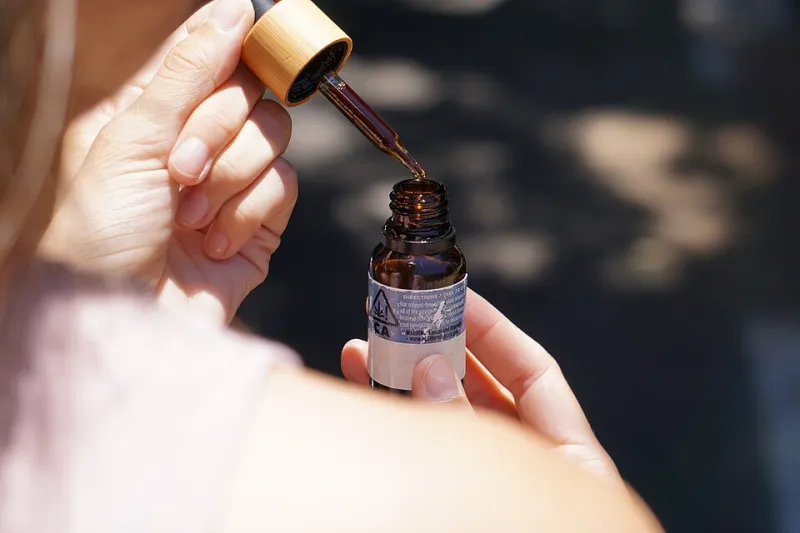
CBD, or cannabidiol, is one of many compounds found in the cannabis plant. Unlike THC, it does not produce the classic cannabis high. In the UK, CBD is sold as a food supplement or novel food, not as a licensed medicine. That matters. It means you will not find a packet of CBD oil with an approved claim to treat hot flushes, night sweats or low mood, and you should be wary of any brand that implies otherwise.
It is also not the same as hemp seed oil, which is a lovely kitchen oil but contains little to no CBD. If a label shouts about hemp but gives no clear CBD content, put it back. Curiosity is fine. Confusion is not a wellness strategy.
Menopause is not one symptom with one answer
Menopause is a stage, not a single experience. Some people sail through with little more than a few flushes. Others find sleep, mood, memory, joints and temperature control all get involved. Some have medical conditions or take medicines that make the picture more complicated. Some are navigating HRT, some have chosen not to, and some are still deciding.
That is why no single product, CBD included, should be framed as the answer. A good midlife routine is usually a patchwork: sleep, movement, food, stress support, possibly medical treatment, and a bit of patience. CBD might be a small square in that patchwork, or it might not be for you at all. Both are reasonable outcomes.
What the evidence can and cannot tell us
Here is the honest version: research into CBD and menopause symptoms is still early. There are studies looking at CBD for sleep, anxiety and pain more broadly, but they vary in size and quality, and they are not the same as saying CBD fixes hot flushes. Menopause research has historically been underfunded, and CBD research is patchy in places. Anyone who tells you the science is settled is probably selling something.
That does not mean CBD is nonsense. It means we should hold it lightly. If you are curious, treat it as an experiment with notes, not a leap of faith. And if your symptoms are severe, are affecting your work or relationships, or are worrying you, speak to a GP. Do not let a wellness product delay proper support.
The label is part of the formula
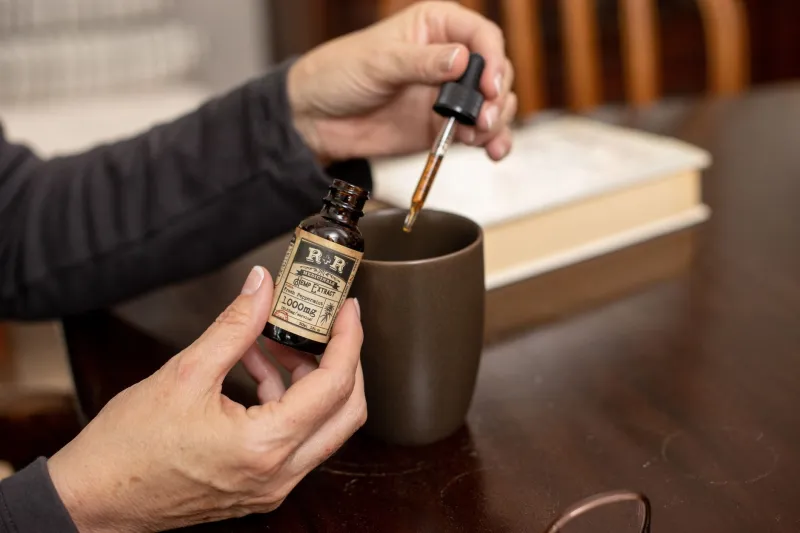
In the UK, CBD products should be clearly labelled with the amount of CBD per drop or per ml, the batch number, and information about THC content. Check whether the brand appears on the Food Standards Agency novel food register, and look for third-party testing. Does the company publish certificates of analysis? Can you find out what is actually in the bottle?
Also look at the carrier oil. MCT oil is common and light. Hemp seed oil and olive oil appear too. None of that is automatically good or bad, but it tells you what you are consuming. If the label is vague, the product is vague. You deserve better than that.
Dose: less drama, more notes
CBD has no standard menopause dose, because it is not a menopause medicine. Even for general wellness, starting low is the sensible move. A few drops, a consistent time of day, and a simple note on how you feel can tell you more than chasing a bigger number because someone on social media said so.
The internet loves to talk about high-strength everything. Your body is not a leaderboard. If you take prescription medicines, including HRT, blood thinners, epilepsy medicines or anything for blood pressure or mood, check with a pharmacist before adding CBD. CBD can interact with some medicines, and that is a conversation worth having properly.
A script for your GP or pharmacist
You do not need to arrive with a PowerPoint. Try something like: 'I am curious about CBD for sleep and general calm during menopause. I am not asking you to prescribe it. Can we talk about whether it could interact with anything I take, and whether there is anything I should avoid?'
That keeps the conversation clear and collaborative. A pharmacist can be especially useful for interaction checks, and a GP can help you weigh up CBD alongside other options, including HRT if that is relevant. Bring the product label if you have one. It helps.
Questions worth asking before you add to basket
- Does the label state the CBD content clearly, per drop or per ml?
- Is the brand transparent about THC content and batch testing?
- Can I find the product on the FSA novel food register?
- Is it CBD, or just hemp seed oil with a nice story?
- Have I checked interactions with a pharmacist if I take medication?
- Am I expecting a miracle, or a small experiment I can track?
The calm conclusion
CBD does not need to be villainised, and it does not need to be crowned. It is one option among many, and midlife deserves a wider conversation than any single bottle can hold. If you try it, go low, go slow, keep notes, and keep your GP or pharmacist in the loop. If you decide it is not for you, that is not a failure. The best midlife routine is the one you can actually live with, calmly and honestly.