Before the Kettle Boils: Rethinking CBD and Your Morning Brew
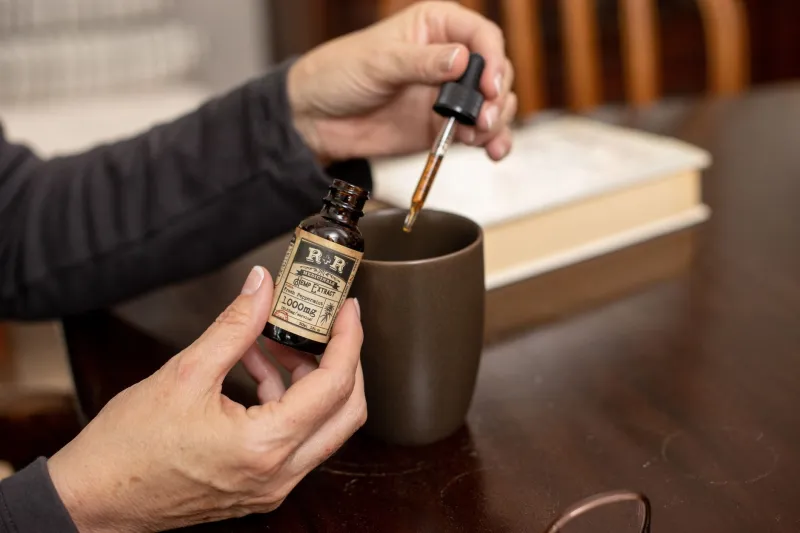
It's 6:52 on a Tuesday. The kettle is on, the mug is warming, and somewhere between the teabag and the toast there's now a small amber bottle. Two morning rituals sharing one stretch of worktop — and, increasingly, one slightly muddled set of expectations.
This isn't a rulebook. Think of it as an untangling: what each thing is, where they overlap, and the questions worth asking before you fold CBD into the most caffeinated hour of your day.
Two rituals that arrived from very different directions
A cup of tea in Britain isn't really about tea. It's a pause with a shape to it: boil, wait, stir, sit. It marks the start of the day, or the moment you admit the day has started without you. Coffee carries a different charge — faster, more purposeful, occasionally a bit of a dare.
CBD is the newer arrival on the counter. In the UK it's sold as a food product rather than a medicine, which means it comes with wellness language rather than clinical promises. It is not licensed to treat anything, and anyone selling it to you as a treatment is already telling you something about how they do business.
So you have a stimulant with a long cultural history and a botanical extract with a short one, sitting side by side. No wonder the question 'should I mix them?' comes up so often.
What caffeine is actually doing at 7am
Broadly speaking, caffeine blocks the adenosine receptors that make you feel sleepy. It doesn't create energy so much as postpone the feeling of needing rest. That's why the second cup often does less than the first, and why a strong brew on an empty stomach can leave some people jittery, flushed or vaguely wobbly.
UK guidance generally lands on around 400mg of caffeine a day as a sensible ceiling for most adults — roughly four or five decent coffees — and considerably less if you're pregnant. A builder's tea is modest by comparison; a large flat white from a high street chain is not.
None of that is a problem in itself. It's simply worth knowing what you're stacking things on top of.
Where CBD fits, honestly
Here's the temptation: treat CBD as a buffer for a caffeine habit. Something to smooth the edges off a triple shot. It's a tidy story, and it's one you'll find all over the internet.
There isn't good evidence for it. CBD is not a sedative, it isn't an antidote to over-caffeination, and no responsible seller should be suggesting it counteracts the shakes. What we can say is that CBD is generally well tolerated by many adults at the amounts found in typical UK retail products, and that the evidence base for most wellness uses is still developing.
If you're taking prescription medication, are pregnant or breastfeeding, or are simply unsure, a quick word with a pharmacist is a far better use of five minutes than any blog post — including this one.
Timing: three perfectly reasonable options
There's no universal rule, but most people end up in one of three camps.
- Before the brew. Drops under the tongue, held for a minute or so, then the kettle. Some people like the sense of having done the wellbeing bit first; others find the taste of an oil first thing slightly bracing.
- After breakfast. A gentler slot. Something in the stomach, a bit of routine attached, no scramble.
- Not in the morning at all. Plenty of people keep CBD for the late afternoon or the evening, and treat the morning as purely a caffeine occasion. That's a completely valid arrangement.
The honest answer is that consistency matters more than perfect placement. Pick a slot, keep it for a week or two, and see how you feel rather than chasing an immediate sensation.
Format changes the experience more than you'd think
A few practical notes for the UK shopper:
- Oil drops are the most flexible, but they don't love hot drinks. Oil floats, clings to the side of the mug and leaves you guessing how much you actually got. If you're stirring CBD into tea, you're mostly flavouring it.
- Capsules are flavourless and portable, but they're a planned decision, not an improvised one.
- Pre-mixed CBD coffees and teas are popping up in subscription boxes and health aisles. Check the milligrams per serving carefully — the number is often small, and the price rarely is.
- Anything claiming to be a 'focus blend' with CBD, guarana and a dozen other things is doing a lot of work with very little oversight. Simplest is usually most honest.
The label check nobody does at 7am
Do it once, at a reasonable hour, and you won't have to think about it again. Look for the milligrams per bottle and per drop, a batch number, a clear statement of what's in the carrier oil, and confirmation that the product appears on the Food Standards Agency's public list of CBD products that can lawfully be sold in the UK. That list exists precisely because this market has been messy.
Build your own order of operations
Some people drop first, then brew. Some brew, then drop. Some have quietly decided the two things belong to different parts of the day entirely, and that's fine too.
What's worth resisting is the idea that there's a correct, optimised, biohacked way to do a Tuesday morning. There isn't. There's a kettle, a mug, and a small bottle you've chosen carefully. The rest is yours to arrange — calmly, and without anyone telling you it's a system.