What Lives Beside the Lamp: Honest Thoughts on CBD and the Wind-Down Hour

Photo: cosy bedside table at night with warm lamp book glass of water and small amber dropper bottle, via i.ytimg.com
Open the average bedside drawer and you'll find the archaeology of good intentions. A lip balm. A bookmark from a book you're still on page forty of. A spare charging cable for a phone you no longer own. And, increasingly, a small bottle of CBD oil standing quietly next to a lamp.
It's the most natural home for the stuff. It's also, quietly, the place where expectations get most out of hand.
Why the bedside table won the argument
CBD is often bought with a vague, entirely human wish attached: to feel a bit less wound up at the end of the day. And the end of the day is when most of us finally notice how wound up we are.
The bedside table sits right at that threshold. It's where the day gets put down. Reaching for something there feels less like taking a supplement and more like part of shutting up shop — the same instinct that makes a cup of chamomile or a chapter of a novel feel meaningful. Proximity does a lot of work.
That's worth naming, because it means a good chunk of what people describe as their CBD routine is really a routine with CBD in it.
The claim-free bit, said plainly
CBD is sold in the UK as a food product, not a medicine. It is not licensed to treat insomnia or any other sleep disorder, and sellers shouldn't imply otherwise. The research on CBD and sleep is genuinely interesting but still limited and mixed — small studies, varied doses, different populations. Anyone who tells you the science is settled has either not read it or is hoping you won't.
What that leaves you with is a reasonable, lawful, widely used wellness product and a lot of very confident marketing. The trick is to hold both of those facts at once, without either dismissing CBD or pretending it's a cure.
Format: what actually suits a bedroom
Not all formats behave the same way at 10pm, and the difference is practical rather than mystical.
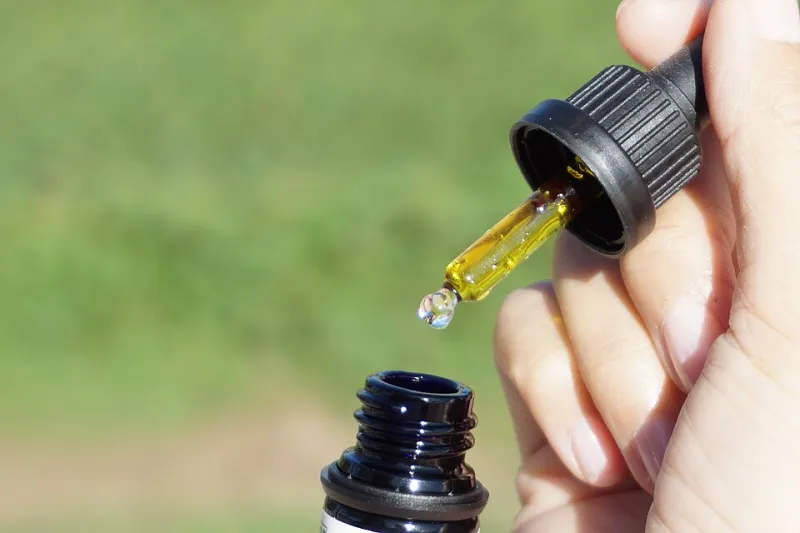
- Oil drops. Sublingual, held under the tongue for sixty to ninety seconds. Quick to take, strong on ritual, and slightly awkward if you're already lying down with a mouthful of minty carrier oil. Keep water nearby.
- Capsules. No taste, no fuss, but slower to arrive and easier to forget. Better if you like the idea of taking something an hour before you intend to be horizontal.
- Night-time powders and cocoa-style drinks. Pleasant, warming, and often very low in actual CBD per serving. Read the milligrams before you fall for the tin.
- Topical balms. Lovely on dry hands in winter. Not a bedtime strategy in any meaningful sense.
- Vaping. Best left out of the bedroom entirely, for a dozen reasons that have nothing to do with CBD.
Nothing on this list is a sedative. If a product is described in a way that suggests it will put you under, that's a marketing decision rather than a pharmacological one.
The two-hour question
Timing is where most routines quietly fall apart. Take something at 11:58pm, mid-scroll, and you've given it no room to be part of anything.
A calmer arrangement looks like this: decide on a rough window, somewhere in the hour or two before bed, and treat it as the start of the wind-down rather than the end of it. Kettle off the caffeine. Phone out of reach. Lamp low. Then the drops, or the capsule, and whatever else you do with the last part of the evening.
Consistency beats intensity. A modest amount taken at roughly the same time each night tells you far more over two weeks than a large amount taken occasionally and dramatically.
Reading the label by lamplight
A short checklist, because this is where the market gets genuinely untidy.
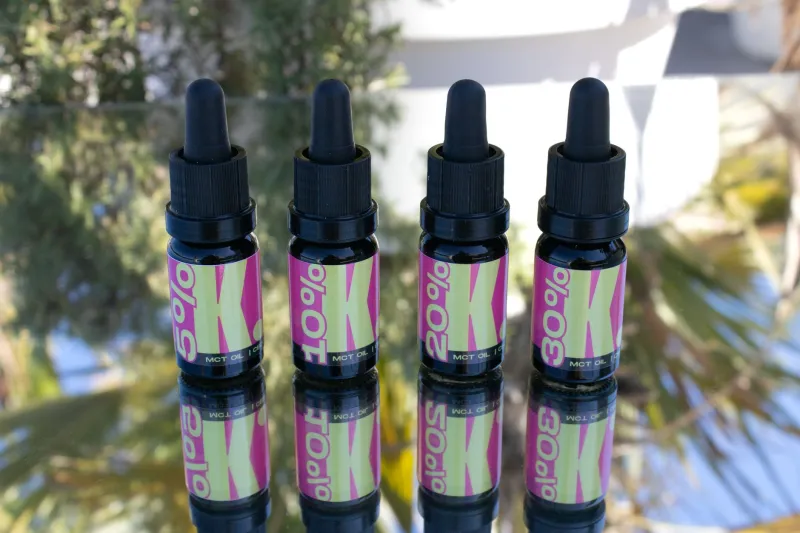
- Milligrams per bottle and per serving. A 10ml bottle with 500mg total is a very different proposition from one with 1000mg.
- The FSA public list. CBD products sold in the UK must appear on the Food Standards Agency's register of novel foods. It takes thirty seconds to check, and it filters out the chancers.
- Batch codes and dates. A product you can't trace is a product you can't trust.
- Carrier oil. MCT is common and neutral; hemp seed oil is traditional and tastes of itself. Neither is a scandal — you just want to know.
- 'Broad spectrum' versus 'isolate'. These mean different things, and the label should say which you're getting without you having to email anyone.
- Anything magical-sounding. Melatonin is a prescription-only medicine in the UK, so a product boasting about it on a high street shelf is waving a red flag. 'Sleep complex' blends with twenty ingredients are similarly hard to assess.
The bigger lever is never in the bottle
The unglamorous truth is that the strongest influences on sleep are free and slightly boring: a consistent wake time, dim light in the evening, less caffeine after lunch, a cool bedroom, and a screen that ends up further from your pillow than your hand.
The NHS's own advice on insomnia is a good read precisely because it asks so little of your wallet. Cognitive behavioural therapy for insomnia — CBT-I — is available through the NHS, and it outperforms almost everything sold in a bottle.
Which is the liberating part. A bedtime ritual is worth having, and a carefully chosen CBD product can sit inside it perfectly well. But it's a supporting act, not the headline.
When it stops being a shopping question
There are moments when the right move isn't a different format or a higher strength. If you've been sleeping badly for more than a few weeks, if you're waking unrefreshed, snoring heavily, experiencing restless legs, or if low mood has moved in alongside the tiredness, book the appointment. Same goes for anything that might interact with medication — a pharmacist can answer that in a chemist queue faster than any website.
And if after a fair trial CBD simply doesn't seem to do much for you, the calm response is to shrug, finish the bottle or pass it to a friend who's curious, and keep the rest of the ritual. The lamp, the book, the early night — those were doing the heavy lifting all along.